

COSTUME ART
On clothing and connection.

The word ‘connection’ has been a hot topic in my house as of late. In an effort to encourage polite conversation at lunchtime, the teachers at my children’s school have introduced the concept of searching for connections, which in this application range from the very simple (I have cucumbers, you have cucumbers!) to the only ever-so-slightly more complex (I have grapes, you have cucumbers. We both brought green foods!). Though this exercise is occasionally delightful (I have sparkle shoes, you have sparkle shoes–connection!), it has served more as a reminder of the simplicity of the human experience. We parse through an overflowing cornucopia of visual stimuli, plucking out patterns, ascribing them meaning. The process can be stimulating or stultifying, but there is no denying that it is a fundamental element in how we relate to one and another and the world that surrounds us.
Connection, in its wholly simple glory, is the central focus of Costume Art, now on view at the Metropolitan Museum of Art’s Costume Institute. In actuality, the key word that the Costume Institute’s curatorial team selected to direct the exhibition was ‘embodiment,’ a focus which is made clear through the division of the show into thirteen body typologies. The idea of clothing as it pertains to the body may not seem groundbreaking (how else would clothes be worn?!), but given the Costume Institute’s history of creating shows with lofty ambitions (Sleeping Beauties, in which clothes floated in airtight vitrines, or Superfine: Tailoring Black Style, in which clothes were expected to correct the Costume Institute’s previous blind eye towards racism), it is refreshing.
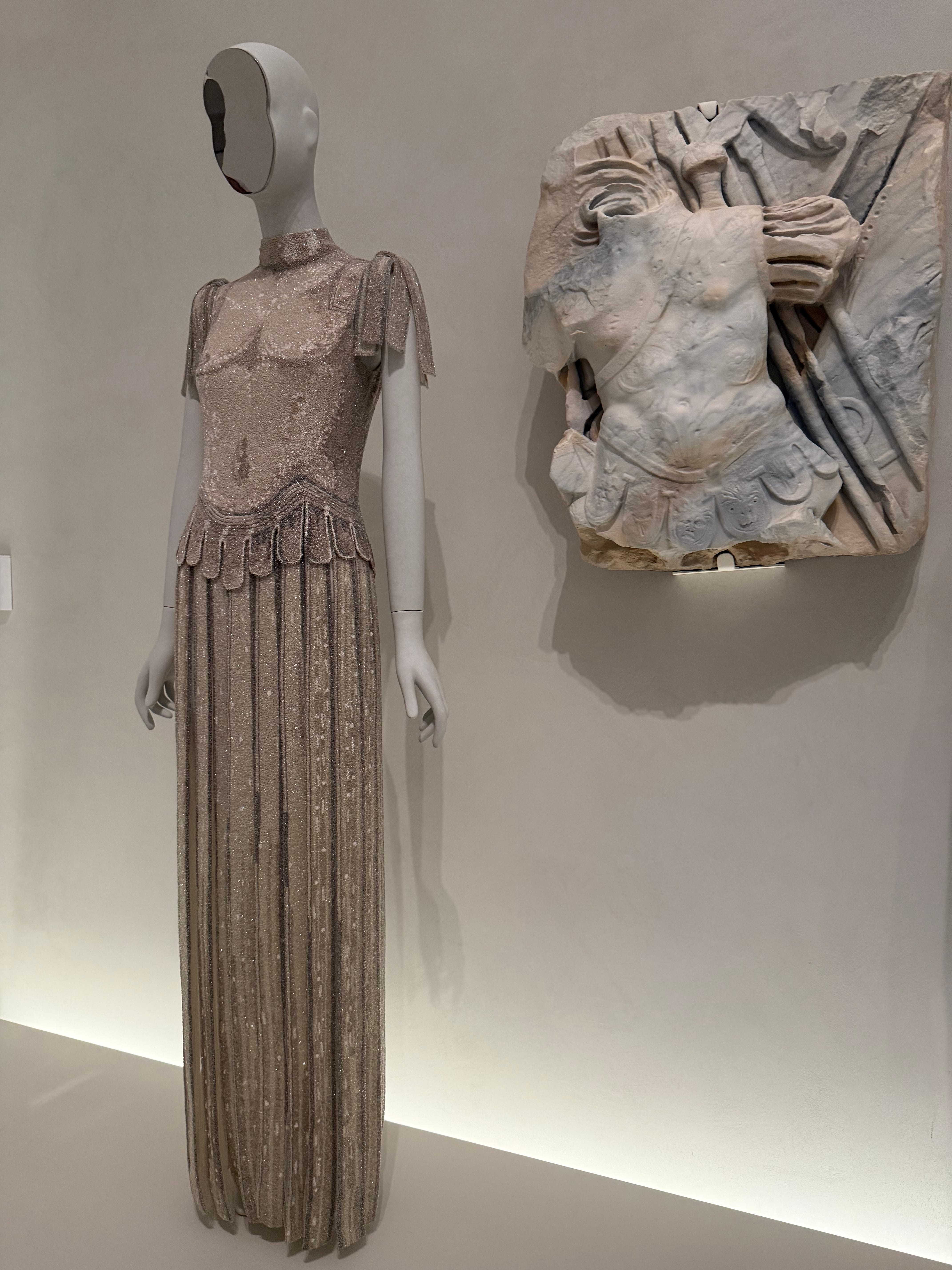
Costume Art applies this generally straightforward attitude throughout the entirety of the exhibition, tracing the connection between paintings, sculptures, and artifacts from the Metropolitan Museum of Art’s eighteen curatorial departments and garments from across history. This approach is grounded in the work of Anne Hollander, preeminent fashion historian whose praises I have sung on here many times, who first gave academic weight to the practice of fashion history by tracing it through the art historical canon in her 1978 book Seeing Through Clothes. (I was delighted to see that Seeing Through Clothes is available in the Costume Institute’s gift shop, should you want a copy of your own). This canonical comparison is most clear—and thus most successful—in the section of the exhibition devoted to the Classical Body, which includes the nude-effect breastplates so popular at this year’s Met Gala, all manners of pleating and drapery (a fixation of both mine and Hollander’s) from the past three hundred years, and other Greco-Roman-influenced trompe l’oeil treats from more contemporary designers. One does wonder if this section stands out as a triumph because much of this curatorial legwork was already done for Goddess: The Classical Mode at the Costume Institute in 2003, and the same could be said of the Adam and Eve-styled pairings that open the show and also appeared in Camp in 2019. However, a good deal of museumgoers are too young to remember these shows and, fresh or not, the connection endures.
Keep reading with a 7-day free trial
Subscribe to OLD FASHIONED to keep reading this post and get 7 days of free access to the full post archives.